


Characters Drift Between Shots
The same character can change face, clothing, hair, or age from one shot to the next.


 Help Center
Character drift, broken scene continuity, and mismatched versions can turn a small fix into a full rework. Automation should surface the problem early and return it to the right node.
The same character can change face, clothing, hair, or age from one shot to the next.
Positions, spatial relationships, and props are hard to keep consistent across connected shots.
Characters, scenes, and references live in different tools, making accurate reuse difficult.
A broken frame, changed character, or bad transition can force the whole sequence to be rebuilt.
Keep characters, scenes, props, boards, and video in a company creative library and reference them across episodes and shots.
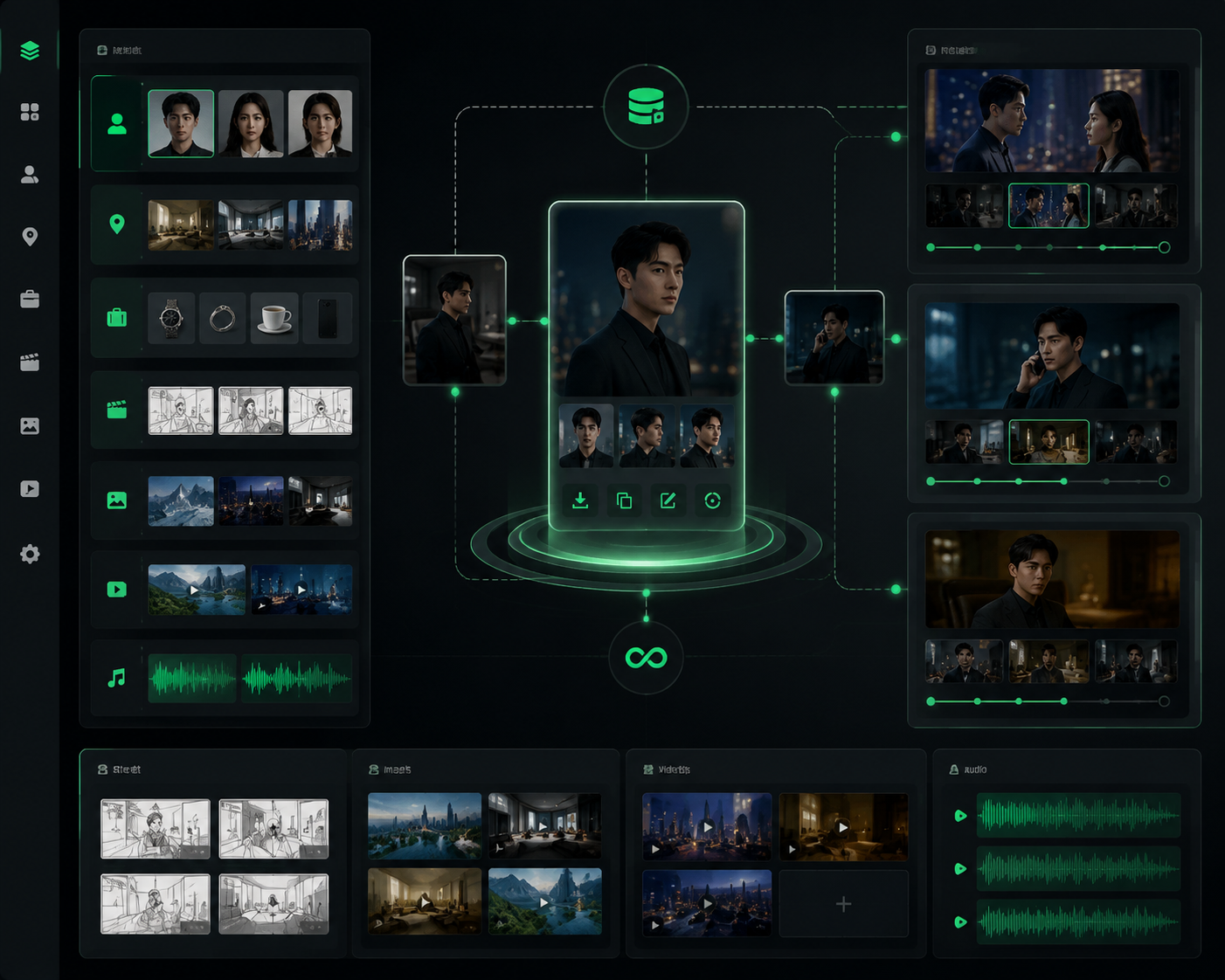
Automation records input, creates nodes, links assets, and surfaces the next step. Direction, review, and release remain human decisions.
Structure an idea, outline, or full script into sections and production nodes.
Link characters, scenes, props, and references to the project for later shots.
Recommend a suitable model and style from genre, prompt, and production node.
Approved sections expand into shots, images, and video tasks with status in one project.
Revise a problem frame, clip, or shot while retaining version and node links, then prepare delivery.
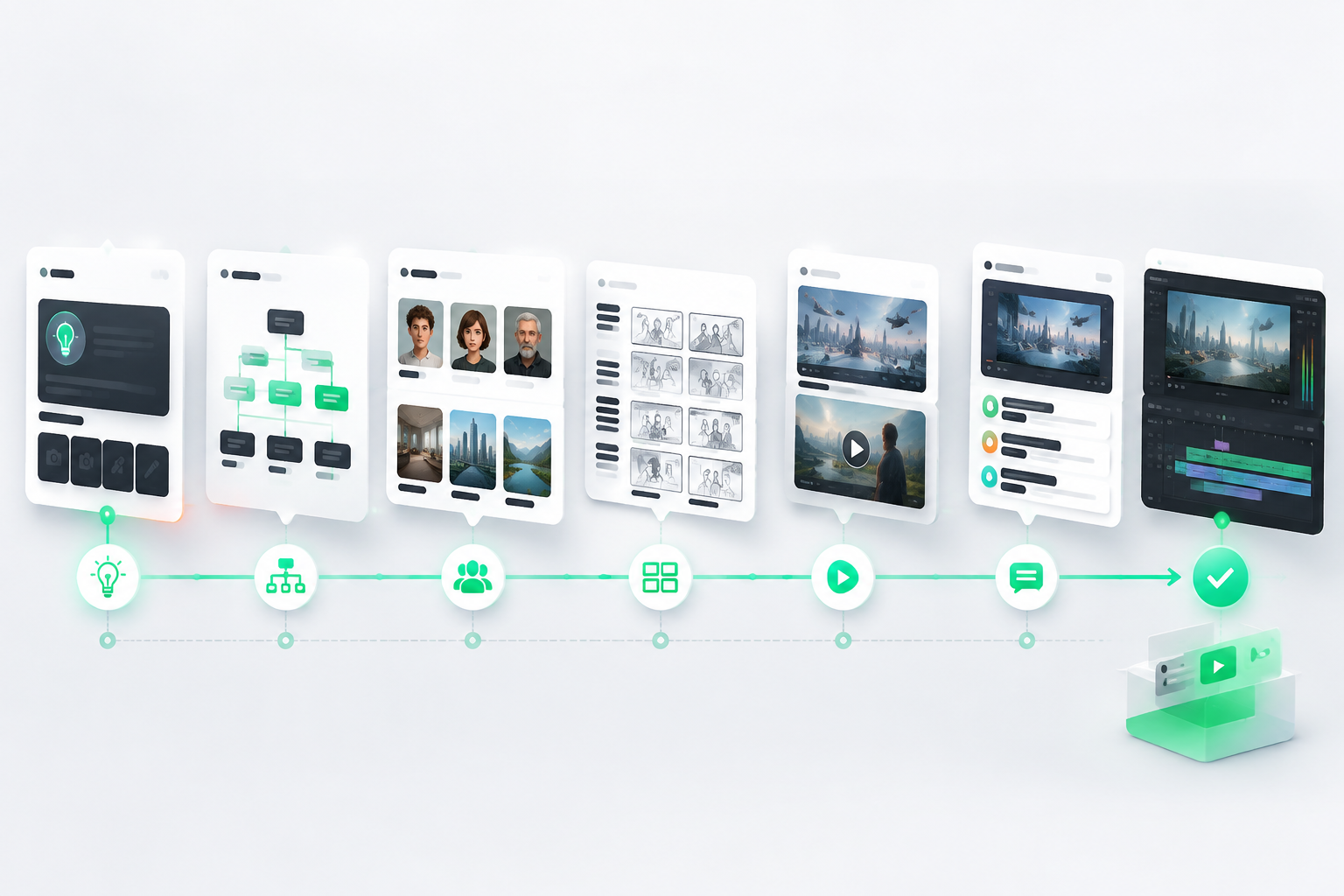
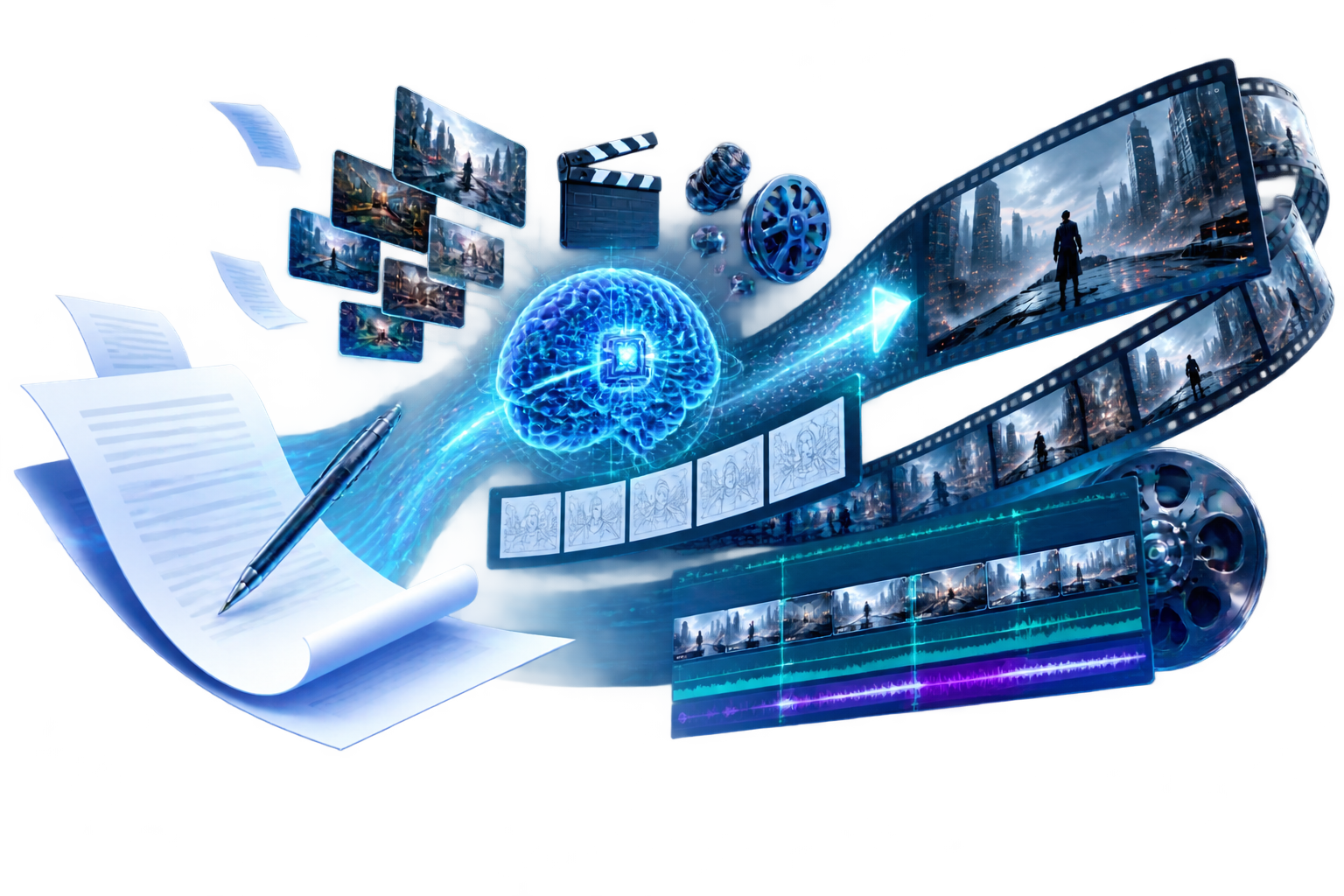
The short-drama canvas keeps scripts, subjects, storyboards, images, video, and final cuts on one production path. Generate fast, then refine any node in depth.
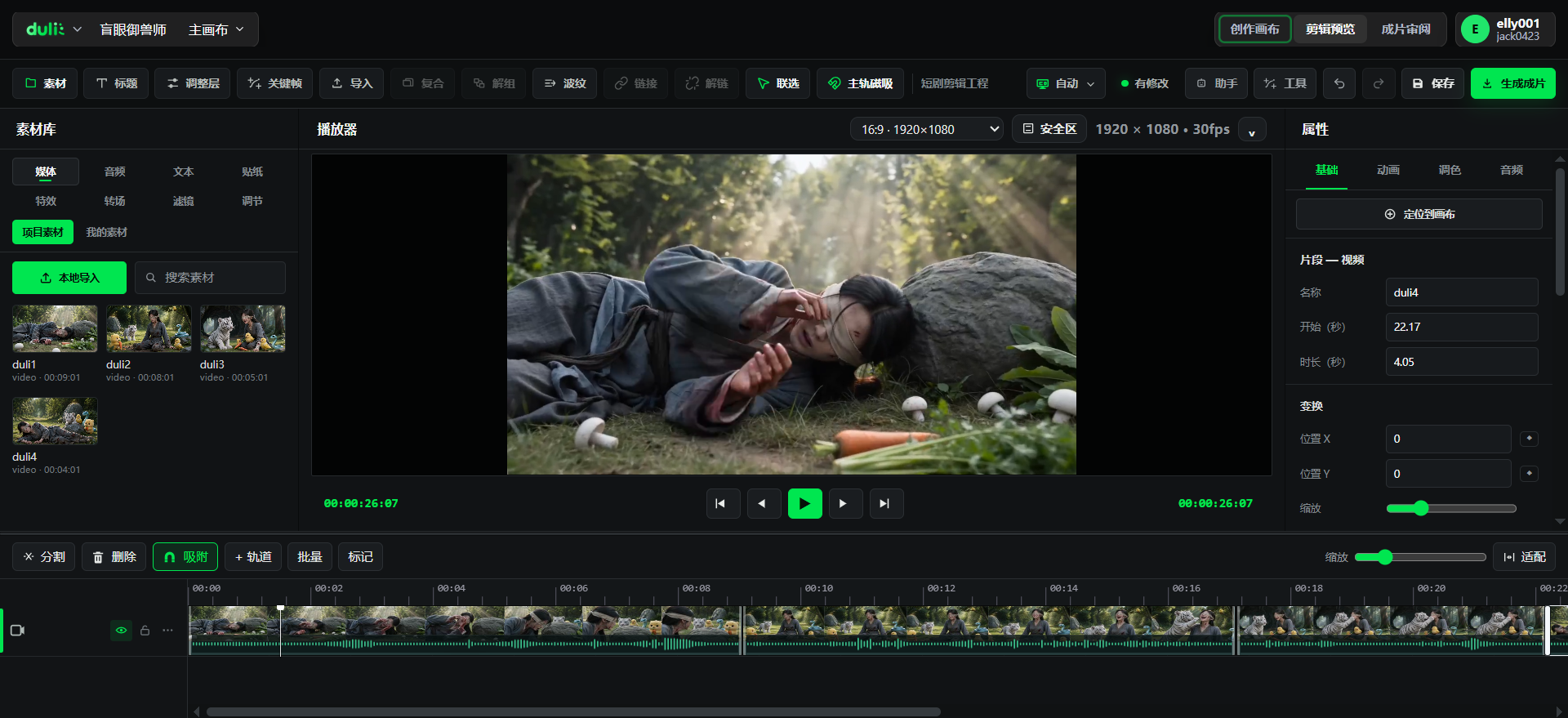
Preview clips, adjust order and duration, and bring AI output into a real finishing flow.
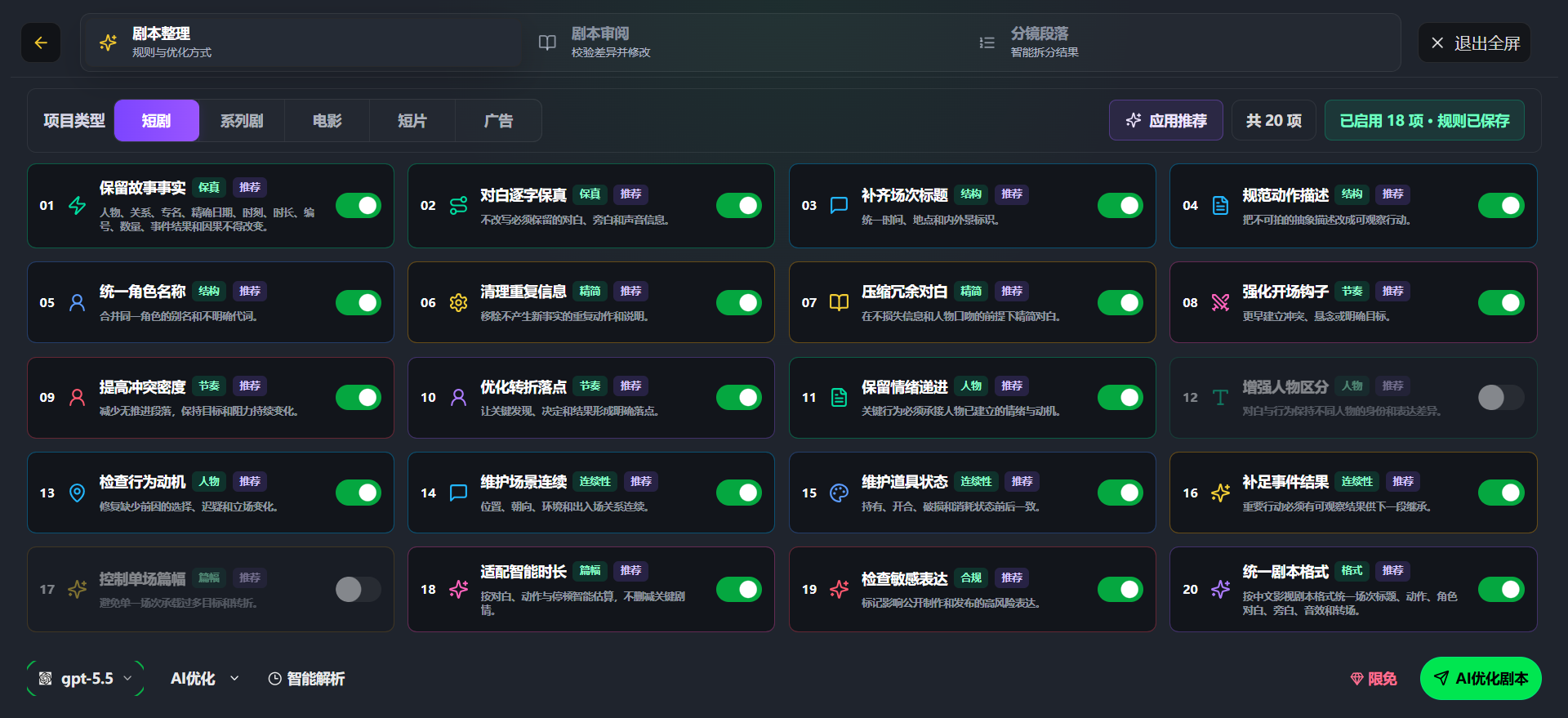
Shape raw ideas and source material into a script ready for production.
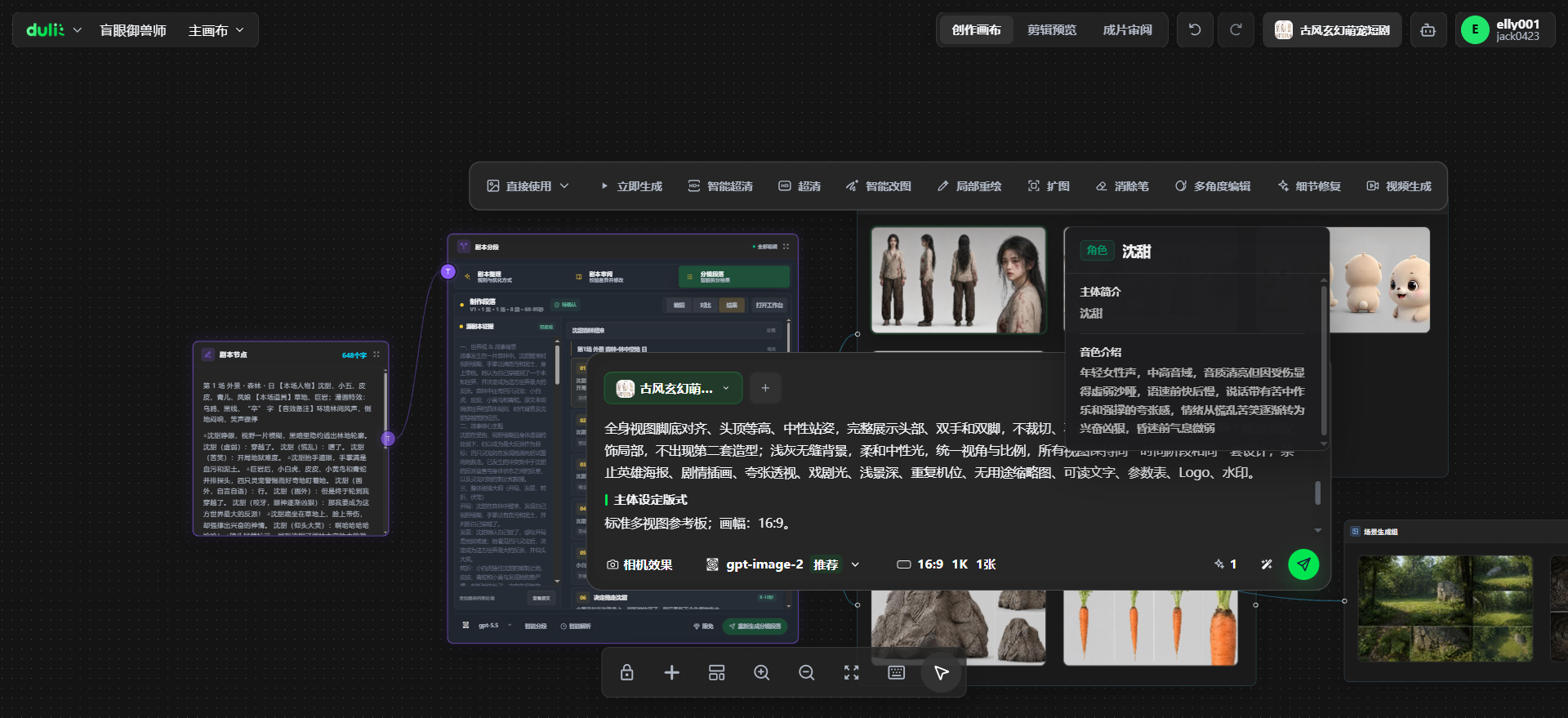
Create characters, scenes, and props, then keep them as project assets.
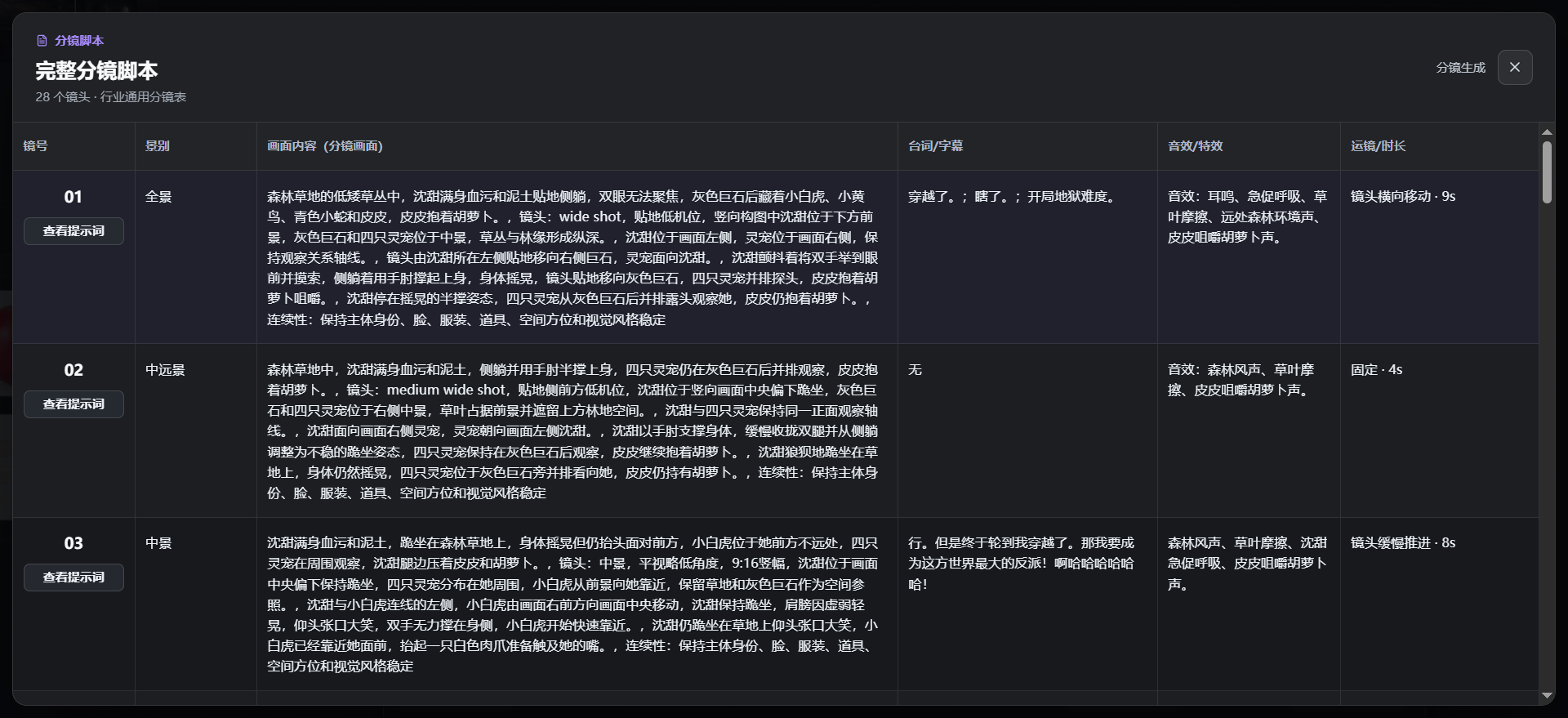
Turn story beats into clear production units with visuals, dialogue, sound, and duration.
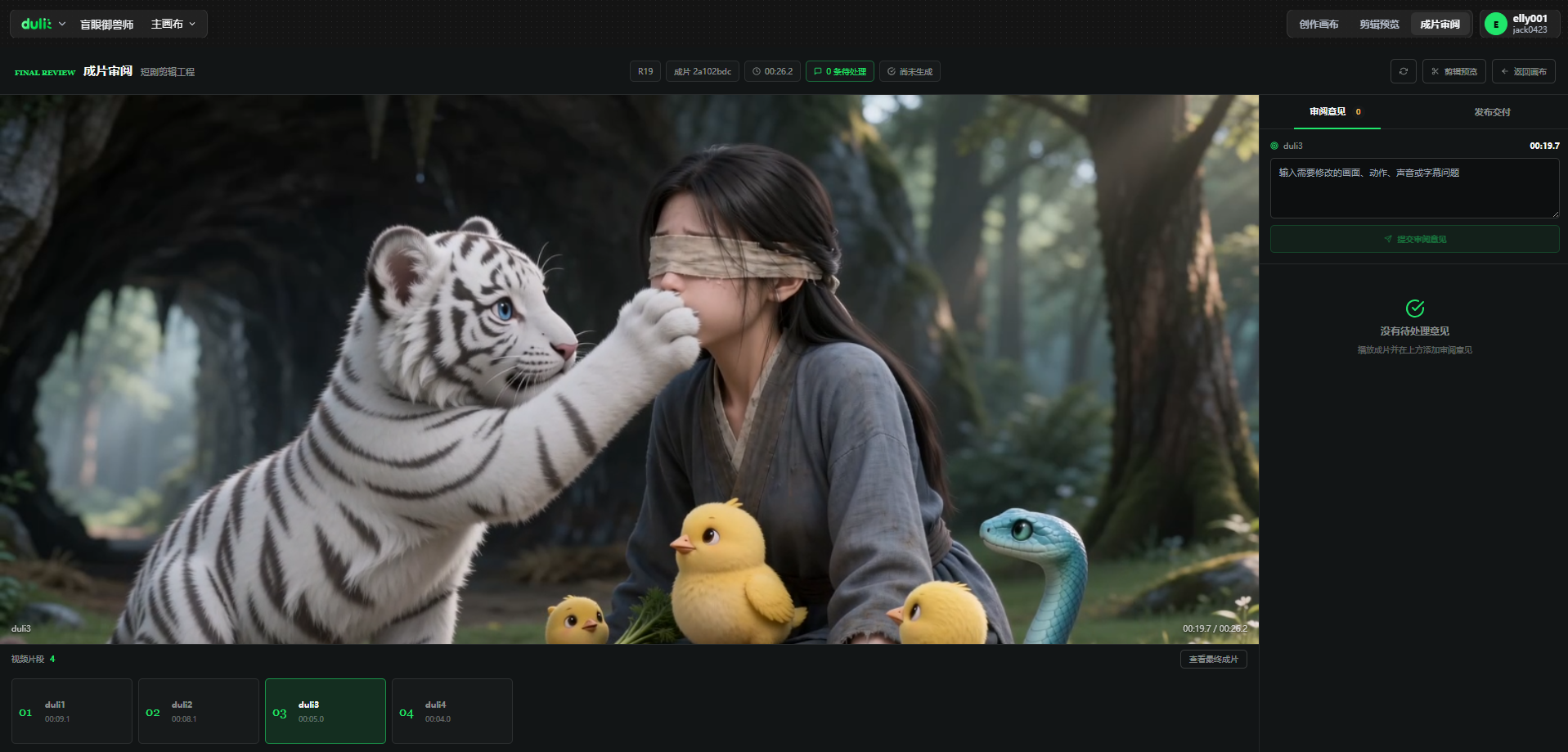
Review specific content in place and avoid repeated explanations or full-sequence rework.
Talk to the canvas agent while creating. It can break down scripts, organize boards, define characters, and refine a specific part while you keep control of direction.
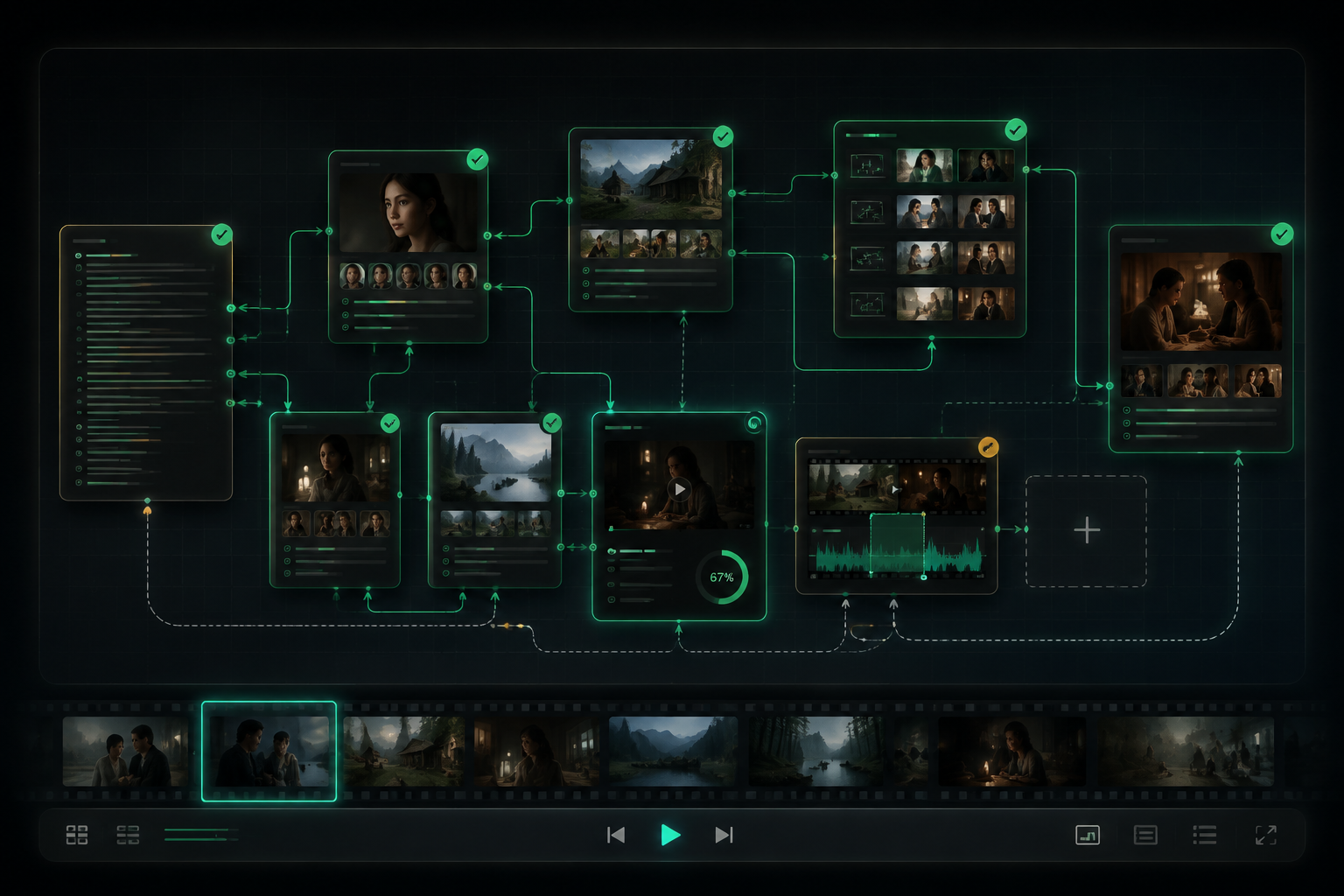
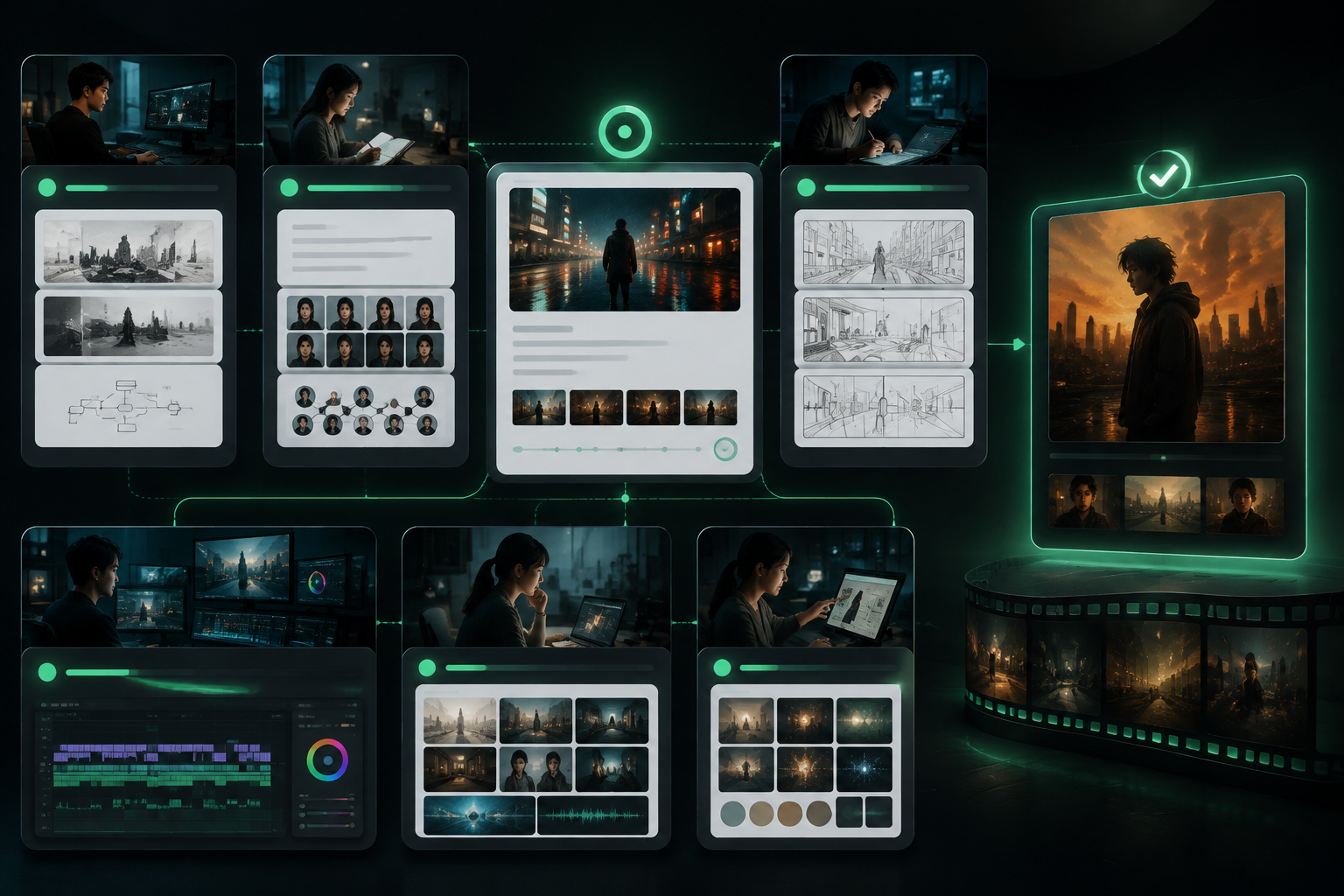
Directors, writers, storyboard artists, editors, and an AI assistant work in a group-style space to turn creation into shared delivery.
Writing, theme extraction, scene splitting, and storyboarding need different model strengths. Duli AI matches models to style, genre, and production step to reduce trial and error.
Explore Duli AI ↗Duli AI is more than a generation tool. It connects messaging, drive, projects, meetings, and permissions so creative output can return to formal project and delivery workflows.
See how Duli AI organizes creation and keeps scripts, assets, and deliveries ready to build on.


